
Denton County · Practical homeowner guide
AC replacement in The Colony, TX
The brand on the cabinet matters less than the design and installation around it. This The Colony replacement guide shows what should be measured, what belongs in a complete quote, and how to compare systems without paying for features your home cannot use.
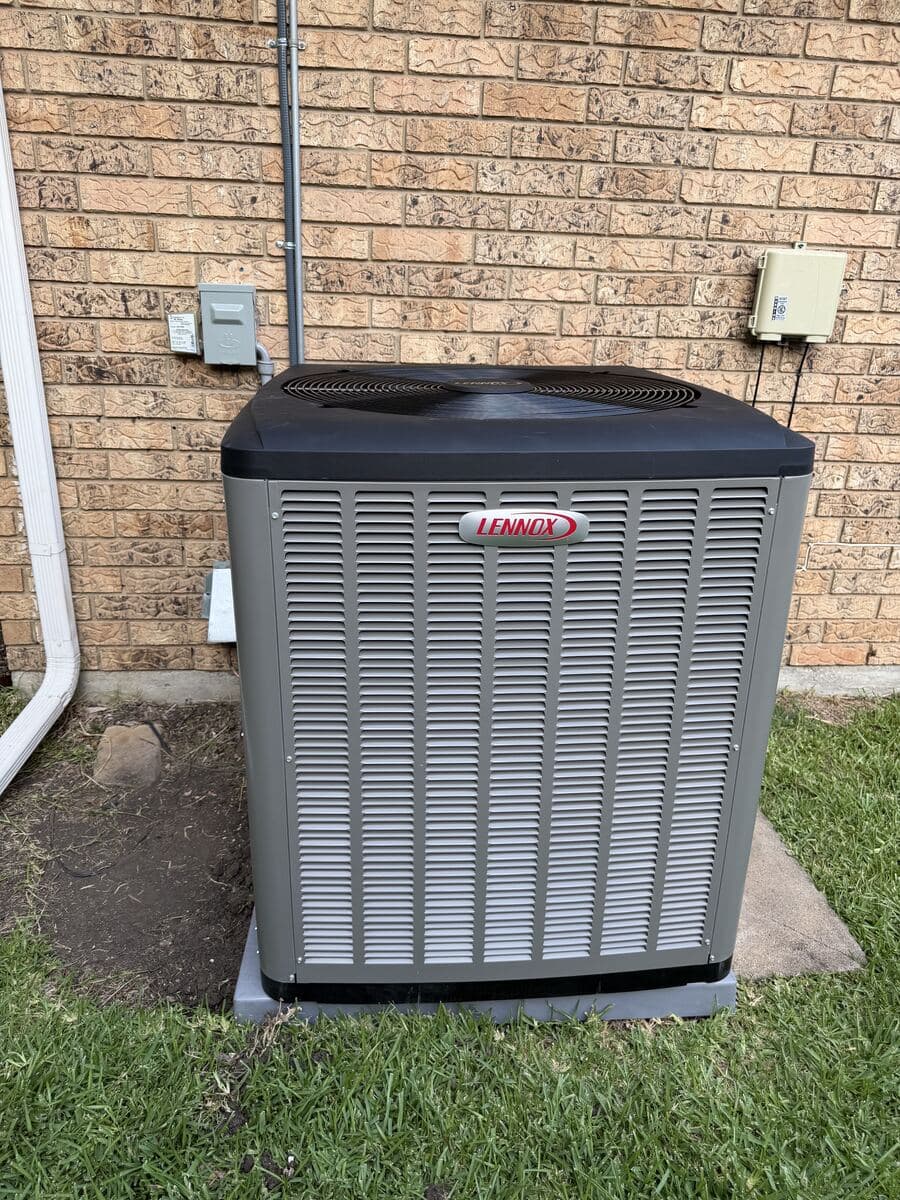
Real Strike Force AC replacement work from the DFW service area. This is company job-site photography; we do not claim it was taken in The Colony.
The Colony context
What changes at a The Colony home
The City identifies heating and AC installation, duct installation or relocation, and new exhaust fans as permit-required mechanical work. Utility context can also vary, so the customer's actual bill—not the neighborhood name—should guide rebate and delivery-provider questions.
Permit-covered mechanical work
The City lists heating/AC installation, duct relocation or installation, and new exhaust fans as requiring permits.
Verify utilities by address
City streetlight information shows more than one utility footprint in local neighborhoods, but the electric bill is the correct source for a home.
Lake proximity is not a diagnosis
We inspect placement, drainage, coil condition, airflow, and operation instead of making coastal-style claims about lakeside equipment.
Verified local administration
Permits and inspections
Heating/AC installation, duct relocation or installation, and new exhaust fans are listed as permit-required work.
The Colony: Do I need a permit? ↗Utility context
Utility footprints vary locally; confirm the home's delivery provider from the actual electric bill or address.
The Colony street-lighting utility context ↗Safe first steps
Start with the house, not the equipment catalog
A replacement should correct the causes of poor comfort—not automatically copy the old unit’s tonnage. Expect the contractor to inspect the envelope, ducts, electrical service, drains, equipment location, and actual room-to-room complaints.
Write down comfort problems
List hot rooms, humidity complaints, noisy registers, long runtimes, and thermostat differences. Those symptoms help expose duct, return-air, insulation, and sizing issues.
Collect real operating costs
Bring a year of electric and gas usage if available. Bills alone cannot size equipment, but they help evaluate whether efficiency claims are plausible for your household.
Photograph model numbers
Capture the indoor unit, outdoor unit, thermostat, and any zoning controls. Matched-system ratings and warranty eligibility depend on the complete equipment combination.
Ask about permits before signing
Permit and inspection responsibility should be written into the scope when required by the local authority. Do not accept a vague promise to deal with it later.
No mystery process
How we build a replacement proposal
- 01
Measure and inspect
We document the home, equipment, electrical requirements, drain route, supply and return system, equipment access, and the problems you want the project to solve.
- 02
Calculate the load
Capacity should be based on the home’s construction, windows, orientation, insulation, leakage, and design conditions—not square footage or the old nameplate alone.
- 03
Present comparable options
Good-better-best choices should state matched model numbers, capacity, efficiency, staging, thermostat, warranty, permit responsibility, and any duct or electrical work.
- 04
Commission the installed system
A new system is not finished when it turns on. Airflow, refrigerant charge, drain operation, controls, temperature split, and manufacturer start-up requirements must be verified.
Make the decision with evidence
How to compare two HVAC quotes
Compare scope before price. A lower bid can omit the work that determines comfort, reliability, and whether the equipment ever reaches its rated efficiency.
Match the equipment
Require complete indoor, outdoor, coil, and thermostat model numbers plus the rated system efficiency. A premium outdoor unit paired incorrectly is not a premium system.
Find the hidden scope
Ask who handles permits, haul-away, drain and line-set work, pad or hanging hardware, electrical changes, duct transitions, start-up, and thermostat setup.
Read the warranty correctly
Separate manufacturer parts coverage from labor coverage. Confirm who registers the equipment, the registration deadline, and what maintenance records the warranty requires.
Keep this list
Questions worth asking any contractor
- Can I see the load calculation and the assumptions behind it?
- Are the indoor and outdoor model numbers an AHRI-rated match?
- What duct or return-air problems did you find, and are they included?
- Who pulls the permit and schedules the inspection?
- What commissioning readings will be documented at start-up?
Service map
Areas we cover around The Colony
Neighborhood names help us plan the route; they do not substitute for inspecting the house or confirming utility and permit jurisdiction by address.
Check our work
Authoritative homeowner references
These public sources support the safety, contractor-selection, sizing, and permitting guidance on this page. Local procedures can change, so we verify them again when a project is scheduled.
- ENERGY STAR: 10 tips for hiring a heating and cooling contractor ↗
Home evaluation, sizing, written estimates, efficiency, and warranties.
- ENERGY STAR: HVAC quality installation ↗
Right-sizing and installation-quality guidance.
- TDLR consumer guide for air conditioning and heating work ↗
Licensing, bids, contracts, insurance, and consumer protections.
Straight answers
AC replacement questions in The Colony
Do AC replacements in The Colony require a permit?
Permit and inspection requirements are set by the local authority and can change with project scope. We verify the current The Colony requirements for the address and state permit responsibility in the written proposal rather than asking the homeowner to guess.
Should the new AC be the same size as the old one?
Not automatically. Renovations, windows, insulation, duct changes, and an incorrectly sized prior system can all change the answer. ENERGY STAR recommends sizing from the home’s actual characteristics rather than a rule of thumb.
Is the highest SEER2 system always the best value?
No. Runtime, staging, humidity control, duct performance, installation quality, repairability, warranty, and how long you expect to own the home all affect value. We show the equipment and operating differences instead of treating one efficiency number as the whole decision.
Ready when you are
Need AC replacement in The Colony?
Start with the symptoms. We will confirm the route, diagnose before quoting work, and explain the options in plain language.
Licensed & insured · TDLR TACLB #40686E · Family-owned since 2011