
Dallas County · Practical homeowner guide
AC repair in Dallas, TX
A no-cool call needs a clear diagnosis, not a sales pitch. Here is what Dallas homeowners can safely check, what our technician tests, and how we decide whether a repair is worth making.
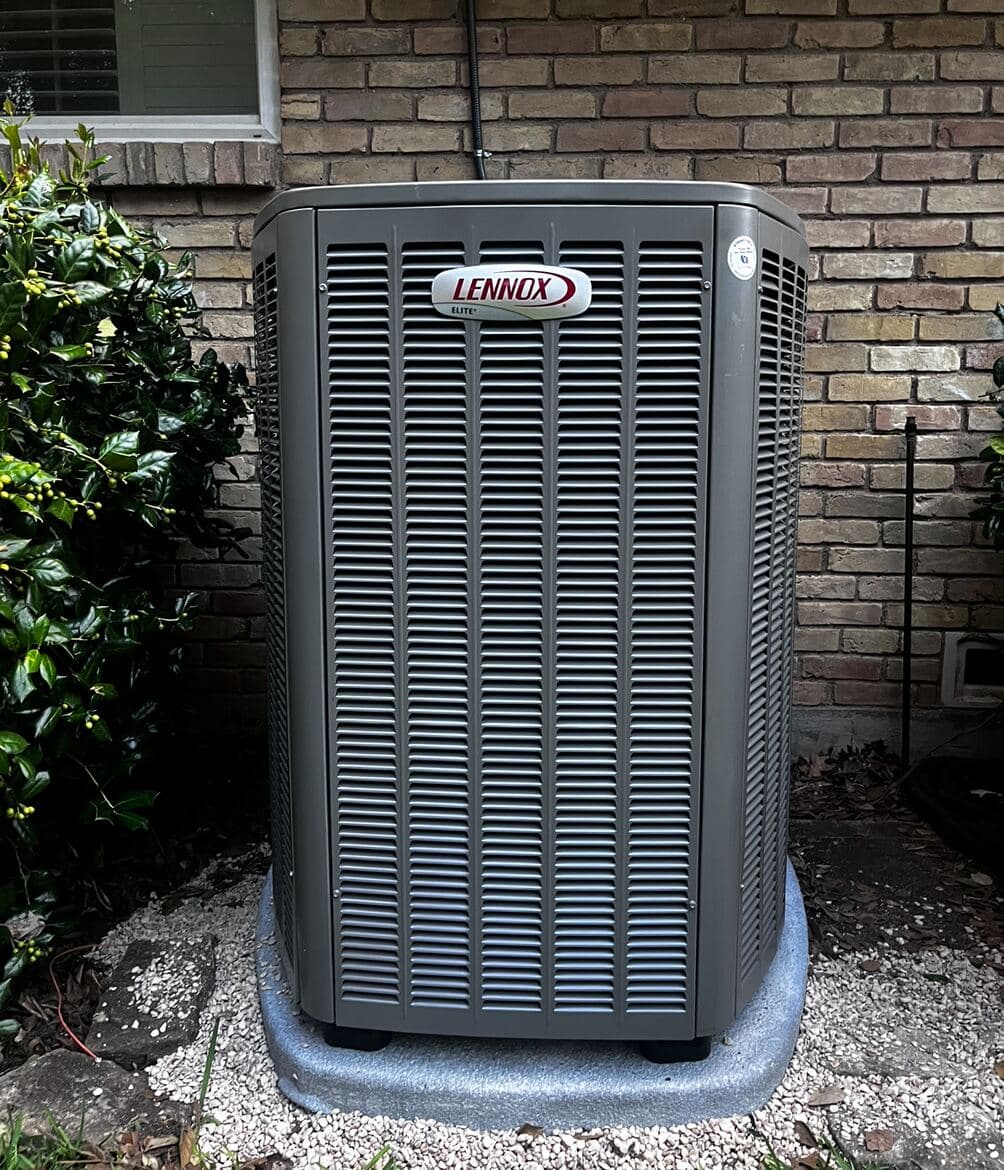
Real Strike Force AC repair work from the DFW service area. This is company job-site photography; we do not claim it was taken in Dallas.
Dallas context
What changes at a Dallas home
Dallas housing is a study in contrasts, and we work all of it: 1920s Tudors in the M Streets with retrofitted ductwork threaded through knee-wall attics, mid-century ranches in Lake Highlands running their original supply layouts, high-rise condos in Uptown with vertical stack units, and new builds in North Dallas with builder-grade equipment that starts failing right after the warranty ends. Each one has its own failure patterns, and after a decade-plus working these streets, we know them by heart.
Older East Dallas homes
Pier-and-beam Tudors and cottages here often run undersized returns that choke airflow. We fix the root cause instead of just swapping parts onto a starved system.
Two-story radiant heat gain
West-facing second floors in Dallas can run 8–10° hotter by late afternoon. Zoning, duct rebalancing, or a mini-split usually solves it without replacing the whole system.
Hail and cottonwood
Spring storms batter condenser fins and cottonwood chokes coils across White Rock and Lake Highlands. Both are quick fixes when caught early — and exactly what our tune-ups catch.
Safe first steps
Before you call: four safe checks
These checks can solve a simple control or airflow problem without opening equipment. Stop if you smell burning, see damaged wiring, or find water near electrical components.
Confirm the thermostat mode
Set it to Cool, lower the target temperature several degrees, and make sure the fan is on Auto. Replace thermostat batteries if the display is blank or fading.
Check the filter and vents
A packed filter can choke airflow and contribute to coil icing. Replace it if dirty, then confirm supply registers and return grilles are open and unobstructed.
Look at the breakers once
Check the labeled indoor-air-handler and outdoor-condenser breakers. Reset a tripped breaker one time only. If it trips again, leave it off and call for service.
If you see ice, turn cooling off
Switch cooling off and run Fan Only if the blower still works. Continuing to run a frozen system can worsen the problem; thawing may take several hours before it can be diagnosed accurately.
No mystery process
What a real diagnostic visit includes
- 01
Reproduce the complaint
We listen to what changed, confirm thermostat calls, and measure the temperature difference between return and supply air instead of guessing from one symptom.
- 02
Test the whole operating chain
Electrical controls, capacitors, motors, refrigerant temperatures, airflow, drains, and safety switches are checked as the symptoms require. A failed part can be the result, not the root cause.
- 03
Show the finding
You get the failed reading, visible defect, or operating condition explained in plain language, plus a flat-rate repair option before work starts.
- 04
Verify the repair
After approval and repair, we run the system through a complete cycle and recheck the measurements that led to the diagnosis.
Make the decision with evidence
Repair now, monitor, or discuss replacement?
Age alone does not condemn a system. The better decision uses the failed component, refrigerant type, repair history, current efficiency, comfort problems, and the cost of keeping the equipment reliable.
Usually repair
A serviceable system with an isolated electrical or drain failure, no major comfort problems, and a clean repair history often deserves the repair.
Price both options
Frequent failures, a compromised compressor or coil, obsolete refrigerant, rising bills, or persistent room-to-room problems justify comparing a documented repair with a properly sized replacement.
Never decide under pressure
If cooling can be restored safely, ask for model numbers, warranty terms, scope, and total installed price in writing before choosing replacement equipment.
Keep this list
Questions worth asking any contractor
- What measurement or failed component proves the diagnosis?
- Is this the root cause, or damage caused by another problem?
- What warranty covers this repair?
- What would you watch if this were your own system?
Service map
Areas we cover around Dallas
Neighborhood names help us plan the route; they do not substitute for inspecting the house or confirming utility and permit jurisdiction by address.
Check our work
Authoritative homeowner references
These public sources support the safety, contractor-selection, sizing, and permitting guidance on this page. Local procedures can change, so we verify them again when a project is scheduled.
- U.S. Department of Energy: Home Cooling 101 ↗
Filter, coil, maintenance, and efficiency guidance.
- Texas Department of Licensing and Regulation: ACR contractors ↗
Texas HVAC contractor licensing and consumer information.
Straight answers
AC repair questions in Dallas
Can I request same-day AC repair in Dallas?
Dallas is inside our stated service area, and earlier calls give us the best chance to fit a same-day visit. We confirm the route and arrival window before treating same-day service as scheduled; during extreme heat, no-cool homes with health or safety risks receive priority.
Should I keep running an AC that is not cooling?
Turn it off if the outdoor unit hums without starting, a breaker repeatedly trips, you smell burning, water is near electrical equipment, or ice is forming. A system that runs normally but cools poorly can usually stay off until it is checked rather than accumulating more wear.
Will you tell me the price before repairing it?
Yes. Diagnosis comes first. We explain the finding and quote the repair before starting approved work; replacement is discussed only when the condition and economics make it a legitimate option.
Ready when you are
Need AC repair in Dallas?
Start with the symptoms. We will confirm the route, diagnose before quoting work, and explain the options in plain language.
Licensed & insured · TDLR TACLB #40686E · Family-owned since 2011